
Making of MEGACORDYCEPS - Meg Tonkin
In between cross-country member visits and work, I had the fun challenge of making a huge soft sculpture in only two weeks. My sewing machine and I quickly claimed the whole kitchen in my little flat; white fabric, needles and stuffing draped over every available surface.
My idea for the DICTIONARY exhibition came to me last autumn, and I started with flicking through – you guessed it – a dictionary. Naturally, I started by looking up my own name, and handily, 'Meg' revealed a plethora of words: megosphere, megalodon, megacity. Using the mega prefix, meaning huge, I decided to make something of my own: MEGACORDYCEPS. Thanks to my two pet stick insects, I had fostered a newfound love of bugs, so researched funky insects next. This is where I found the cordyceps fungi, a fungus that infects insects from the inside out and grows fantastic-looking tendrils out of the host body. Not fun for the insect, but visually a spectacle. Knowing I wanted to go large, I put together some digital mock-up images of my take on the fungus, using body parts from old drawings of mine.
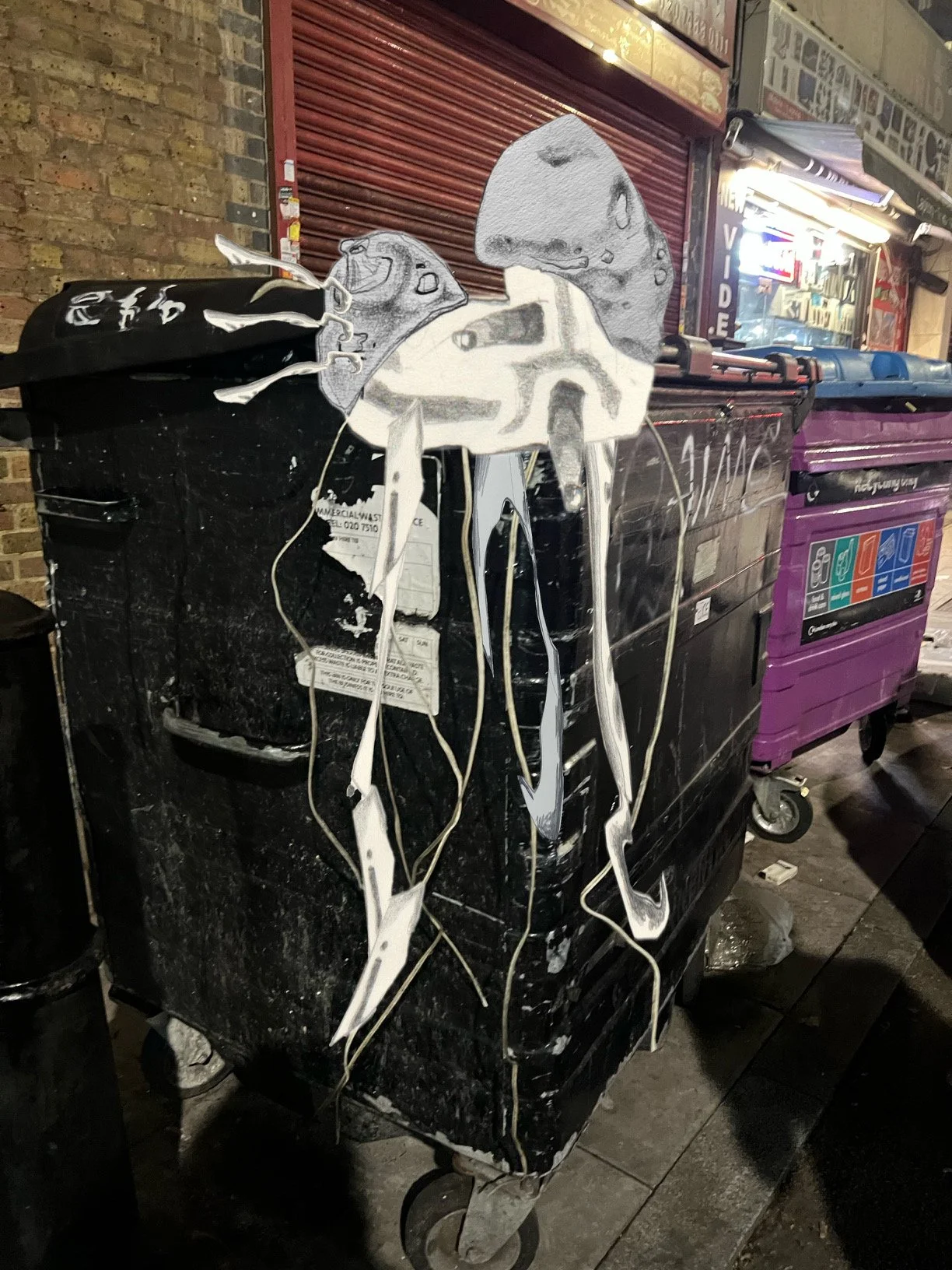
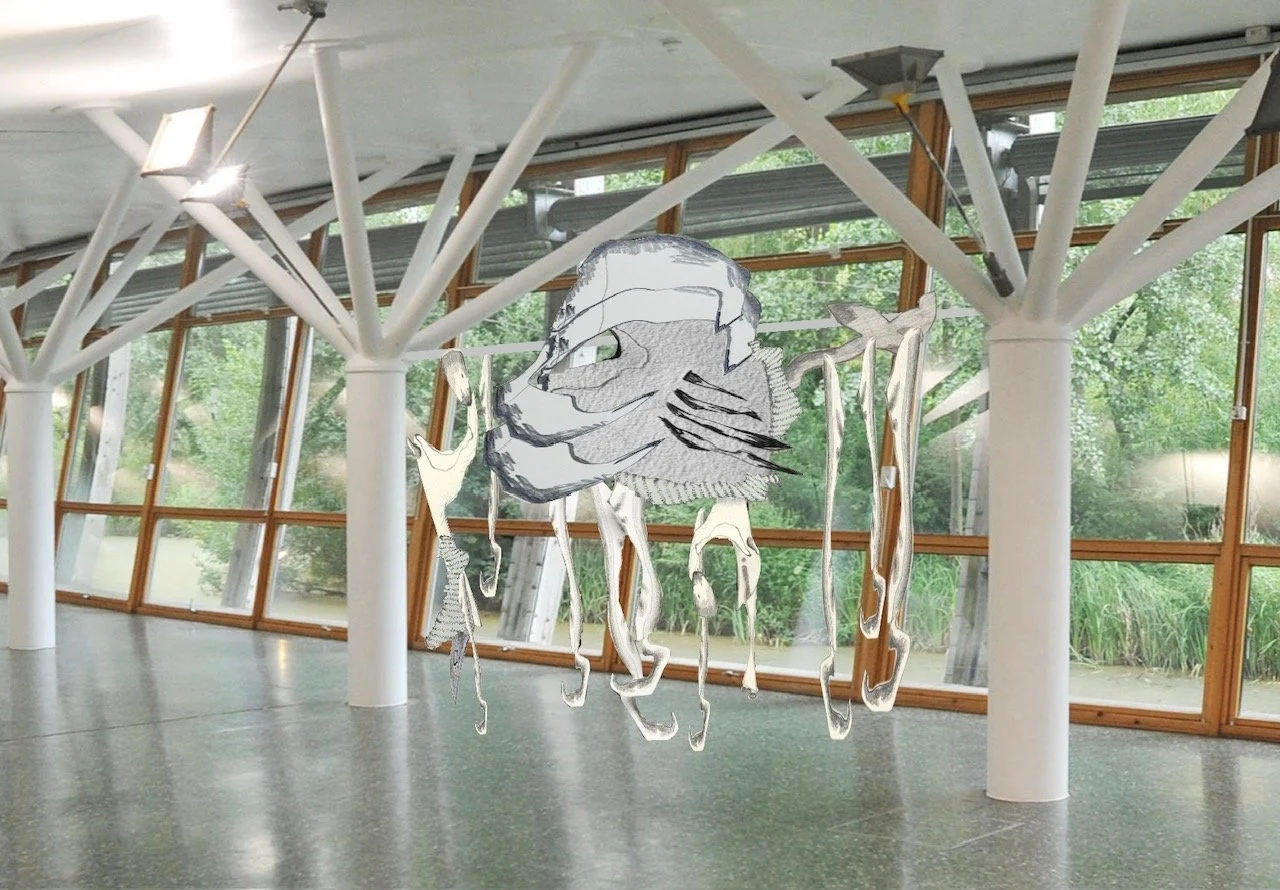
I knew these designs would be best translated into soft sculpture, so I got a head start searching for white fabric, wanting to make the sculpture look like my graphite drawings come to life. Thanks to some lovely donations of bolt of fabric and bed sheets from PRISM members Patti Taylor and Kim Winter, I had more than enough to play around with!
Starting is always the hardest part. I had a pretty clear vision of what I wanted the work to look like, but there were loads of technical questions to figure out too, especially as I only had a two-week window to actually make the piece because of space constraints. That meant months of planning beforehand.
I spent a lot of time discussing the drawings with PRISM members, chatting through ideas and getting feedback as I travelled around visiting people's studios. I also had the huge benefit of working with Wolfgang Woerner, Annie Taylor and Helen MacRitchie, who are experts in soft sculpture. Before I even started making, I explored different methods of construction, made samples, and tested various ways of connecting all the elements together. One big decision was whether the work should be one enormous sculpture or a collection of separate pieces that could be assembled at the gallery.
Even with all that preparation, there were still some technical questions to consider. Having no idea what the work would weigh, or how long the supporting pole would be, I began slightly blind. I decided to focus on the main body first, creating a large abstract shape to work up from. Using a broom handle as a faux pole, I created the body around it to ensure it would be secure and strong, not yet knowing how heavy a large-scale soft sculpture could be.
At the same time, I was testing painting on fabric to add in the detail from the drawing. Painting on the shapes before I stuffed them created much more saturated shades, so I did this for all the thin tendrils I had begun making.
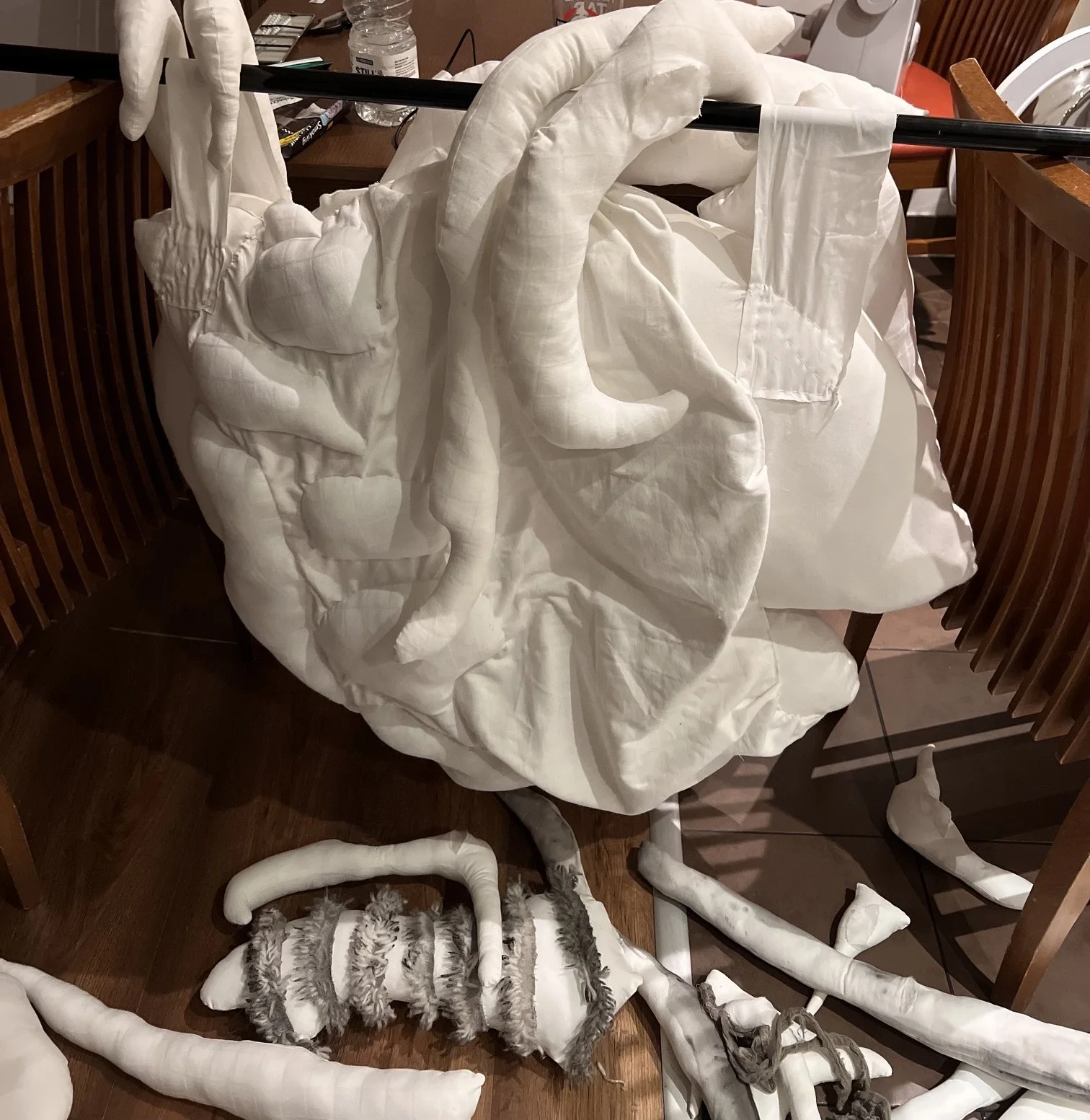
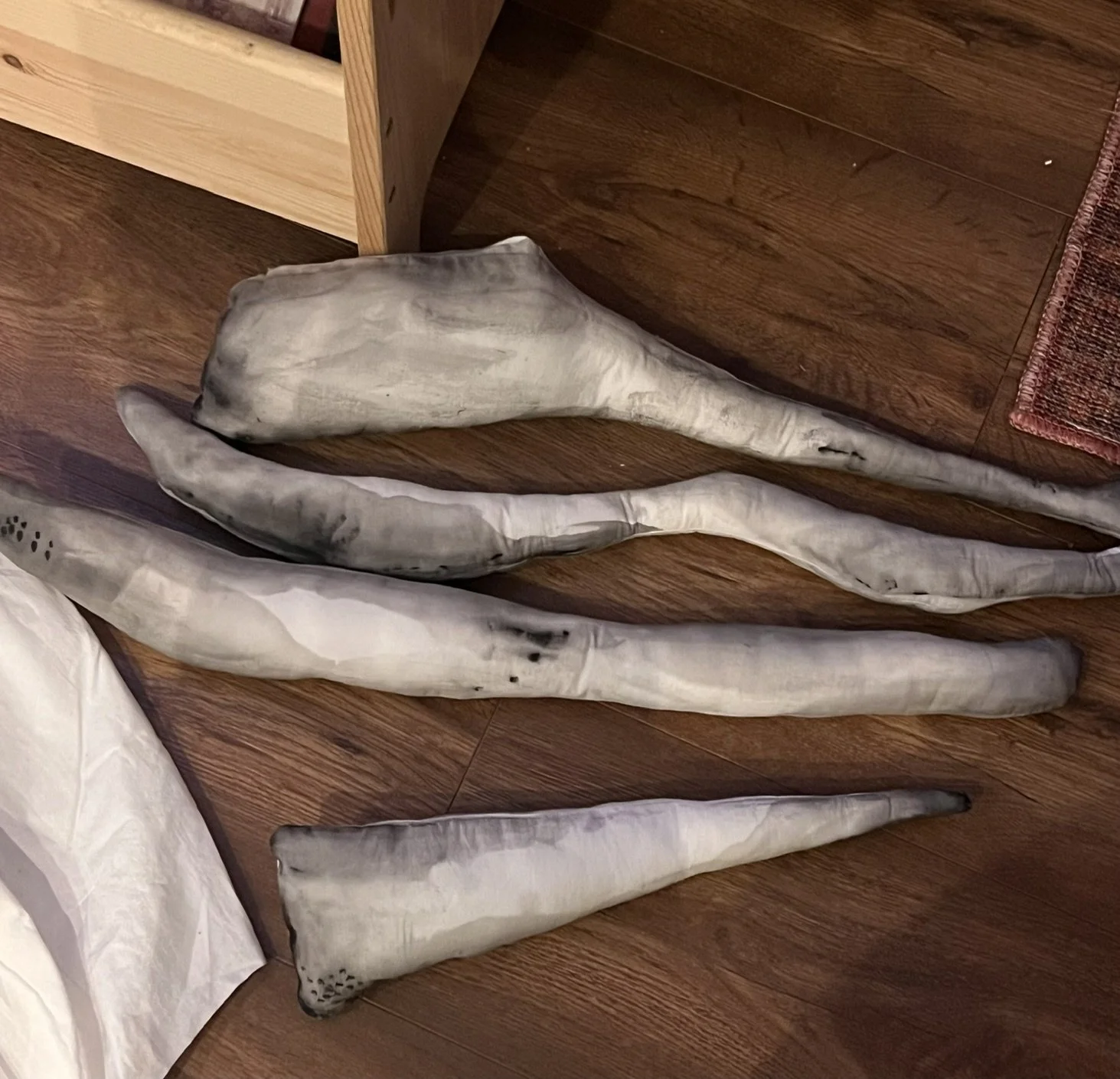
At this point, I had used roughly a week of my precious two weeks of making and was beginning to get a bit concerned about time. I had an array of painted tendrils and a blank main body. I decided, for time purposes, to start making batches of tendrils, following the shapes from my drawing less strictly and instead drawing out random shapes and intuitively arranging them together after being stuffed. This saved time, as I could commit to sewing for hours straight on the machine, then cutting, turning and stuffing heaps of them at a time. It was effectively a production line with one member: me.
By the time drop-off day swung around, I had multitudes of soft sculpture forms and completely numb hands. A lot of the work was going to have to be sewn together on site, which was a daunting concept. My flat was too small to put it all together while still leaving a usable living space for my flatmates and me, so I had permission to do this at the gallery.
I enlisted much-needed help from my friend Anna and my boyfriend Gabe, and bright and early we rocked up at the gallery. After a gruelling day of HOURS of hand sewing, the last task was to paint the finishing touches. Those reading this may think this should have been an earlier task, and upon reflection, I would agree with you. However, I needed to see the fully formed MEGACORDYCEPS to decide what needed painting. My saviours (Gabe and Anna) provided much-needed moral support and caffeine, and the painting was underway.
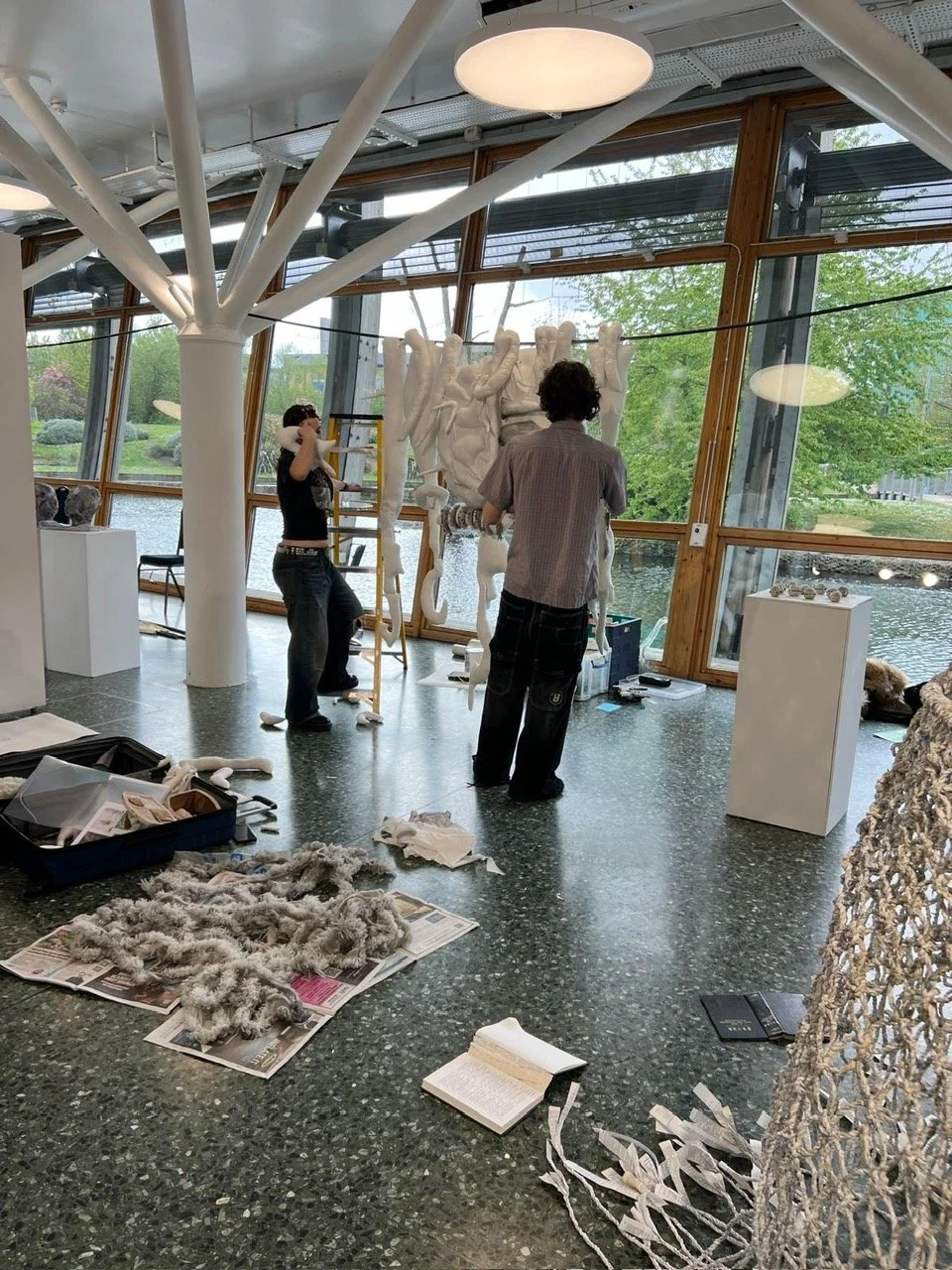
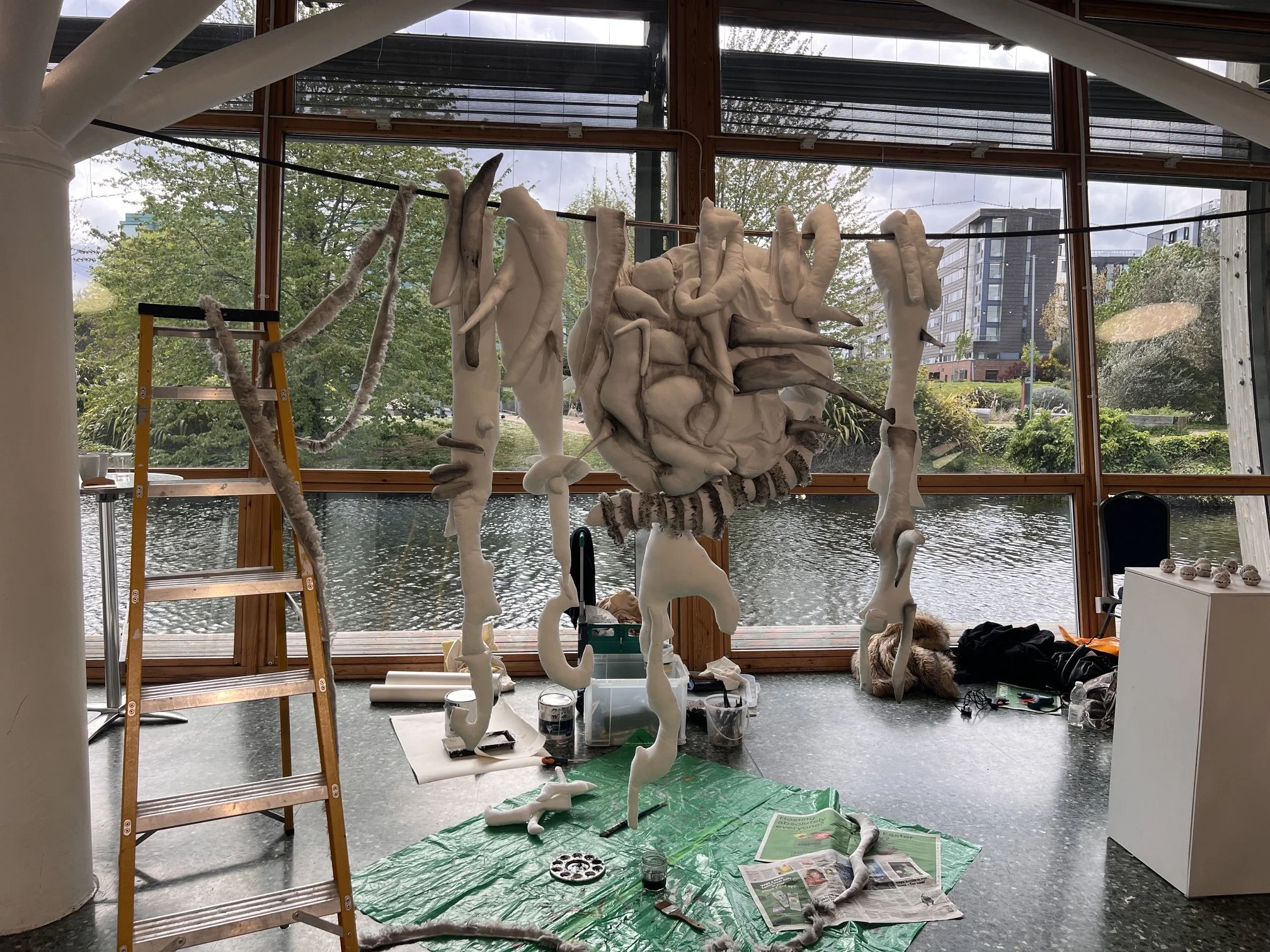
By the next day, everything was done. The paint was dry, needles and thread had been swept away, and my sewing machine was packed away to rest. The experience of this exhibition was as intense as I had expected with the time limit planned, but even so I am still surprised it had actually come together by the deadline. Many PRISM members gave me lovely words of encouragement and assistance, and I am so grateful to everyone. An extra-special thank you to the exhibition team, Marian Murphy and Marilyn Hall for putting up with me, and to all those who put in time to make the show as successful as it was.
Meg Tonkin